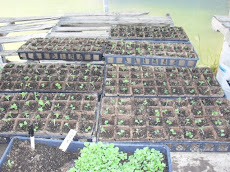
In the movie Holes, the boys have to dig a 5 ft by 5 ft hole everyday. They’re told this exercise is “building character,” when in reality it’s to look for an impressive amount of wealth stored in a trunk, buried in the ground. Anyways, in the beginning of the summer, Eric, Ellyn and I did a lot of digging. Not 5 foot holes, thank God, but thousands of little holes for transplants, and we’d always joke that we were “building character.” As I write, on my last night here at Maplewood, I think of all that I’ve gained this summer, all the life long skills I acquired over the past three months surprise me beyond belief, and it’s been more of an experience than I could have ever imagined. I have to say though, aside from building your mind, building your appreciation for the earth, healthy soil, the farmers that work harder than probably any other occupation, building muscles; life on an organic farmer truly does in fact, build character.
After 5 hours on the road, 3 bathroom breaks, one car swap, our crew of Hannah, Susie, Ellyn, Eric and I finally made it down to Amherst Massachusetts for the NOFA (Northeastern Organic Farming Association) conference at U MASS. The three day event featured two phenomenal key note speakers, a series of many diverse workshops, a fair, farmers market, and even a night of contra dancing! Friday’s keynote speaker….can’t remember his name…. spoke all about the wonderful world of mushrooms and fungi and their growing role and importance in rebuilding nutrient rich soils and even helping cure illnesses. Last nights speaker, Will Allen, is a farmer from Milwaukee. His strong build and impressively tall height gives him a powerful presence, his dark skin color stands out at a Northeastern Organic farming convention, and his work inspired us all. In the heart of Milwaukee, he started, Growing Power, a working farm and educational outreach program, which seems to have blossomed into an empire since it began about 20 years ago. He grows pretty much anywhere he can, has a staff of 35, all nationalities and all ages, works with inner city kids, teaching them where their food comes from, has brought his work to Kenya, teaching them to build up their soil, produces all his own soil through compost and red worms, and so much more! Clearly Will inspired at least one of his audience members.
I attended workshops on starting a campus garden at your college, water bath canning, sheep raising, baking no knead bread, engaging inner city youth with community gardens, becoming more self reliant during economic times…. Some more interesting than others, but all good! The fair, which took place on the campus green, yesterday afternoon, had all sorts of country fun! Cow’s pooped on grids, kids raced to eat corn on the cob off dangling string, adults raced to shove down expensive, organic pies, People spit watermelon seeds, cattle dogs rounded up ducks, and people made butter! Clearly, a wild and crazy time was had by all. ;)
So…it’s my last night. After living with the Noel’s, sharing one bathroom with 6 other people, weeding for hours in the field with a blazing sun beating down, weeding in the field with rain drops beating down, selling at successful markets, selling at not so successful markets, collecting and washing dozens upon dozens of chicken eggs, trying to keep Eric from killing Stewy, laughing hysterically with Ellyn over absolutely nothing, answering many questions asked by Maddy and Calvin, jarring sauerkraut (which is the only food here I won’t eat!), watching cows shipped away to the butcher, then eating the heart of “Pretty” unknowingly in a stew….it’s been one hell of a summer!
I can’t even begin to articulate back all that I’ve learned and gained from this experience…. I hope that I’ve inspired some of you readers to look into the food system more, learn where you receive their own food from… and all that jazz. But maybe more importantly, perhaps inspire you to simply, start a garden of your own; even if it’s just some pole beans and peas (which I would suggest, because they’re real easy), is a great way to start. Can with your family in the fall. For all you Central New Yorkers like myself, canning our wonderful apples in October would be a great way to taste the fall during those long cold winters! Cook meals with your family, housemates, or friends from scratch, visit a farm and see how the whole process works. Food connects us. All of us eat. It’s as simple as that, and in my opinion, it’s the best way to change direction our environmentally destructive world is heading in. We all need to eat, so if they way we obtain our food is done in a sustainable way for the planet and our bodies, I like to believe we’ll see how everything else connects and relates to all life on earth, and fix that whole mess too. But don’t just join a CSA or buy organic blueberries because it’s trendy or you want to “go green”, do it to become a part of natural cycle of food, and understand its value and importance.
But I’ll get off my soap box, and wrap up this final blog! It’s strange, knowing this life is coming to an end tomorrow morning. I’ll miss smelling tomatoes as I walk down their rows, looking for ripe ones to pick. I’ll miss watching the mist rise off the pasture on early mornings when I feed the chickens, miss getting hugs goodnight from Maddy and Calvin every night while I’m typing this blog, miss not having my cell phone on me all the time, and not having to wait for someone to finish texting before I can talk to them. I’ll miss Stewy, and calfy, those crazy harvesting morning, crusin’ in Ellyn’s Legacy listening to her old blues tapes, eating beans and peas right after I pick them, because those couple serve better in my stomach than a CSA member’s. I’ll miss jumping in the pond after a sweaty afternoon of weeding, racing Ellyn to the camper at night, and sleeping in it, we’ve made it quite homey believe it or not! But, guess it’s time to get back to my “other life”, and plus, I really miss my dog ha ha. So that’s it. That’s my organic summer. Hope you’ve enjoyed following the experience as much as I’ve enjoyed living it and writing about it. :)
Don’t be afraid to get your hands dirty and see what you can grow! There’s a whole bunch of un-used land out there, just waiting to grow delicious life from it, so why not bust out those action hoes and old ripped jeans, and go to town with your green thumb? Because what’s the worst that could happen? Even if a bug eats your kale before you get a chance, or your lettuce goes to seed because you waited too long to harvest it, at least you’ll build some character, right? ;)
My Suggestions on what to grow your in your first garden:
1. Sugar Snap Peas! They’re so delicious right off the plant and you don’t need to weed, because weeds support the plant!
2. Rattlesnake Pole Beans. So scrumptious, again, right off the plant. You’ll have a cool looking tee-pee in your yard, with beans growing on them, all your neighbors will be jealous.
3. Squash. Winter or summer, winter just takes a lot longer. The leaves get big, so it’s usually less weeding.
4. Heads of lettuce. Who does like a fresh salad with a summer dinner?
5. Kale and Swiss chard! You can cut their leaves pretty early into the growing season, or wait until the get really big! Just cut leaves off the stem and more will keep growing back throughout the summer!
6. Beets, carrots and radishes. Because they’re colorful and fun to find when you dig them up!
P.S. I have some more pictures to post, but the chord that connects my camera to my laptop seems to have run off on me, so hopefully they'll show up soon!
Sunday, August 9, 2009

Thursday, August 6, 2009
Life on an organic farm is...for me, soon and strangely coming to an end
As my days living and working at Maplewood come to an end, I surprisingly spent the afternoon of my last full day at Maplewood, not at Maplewood. Ellyn and I traveled down the road in her trusty old Subaru Legacy, to Guy’s Dairy farm, for four hours of working with some lovely Holsteins. Guy and one of his hired hands, twelve year, Caleb, showed us the ropes, where to shovel old hay, where to shovel lots and lots of cow poop, how to lead the cows into the barn from the pasture, clean their tits with diluted iodine, hook up the milking machines to the pipes running up through the barn and hook the suckers on to their tits. Extremely educational to say the least, we jumped right in and learned the only way we’ve been learning all summer, hands on.
The odor of the shit, as they all kept referring to it as, fills most of the barn, as expected. Pre-milking chores include racking the poop from under the cows in their stalls, onto the indented track behind where they stand, which pushes all the cow waste, for a better term, into a 12 foot deep storing well, that Guy has admitted to climbing down to save a kitten! Farm cats and kittens walk everywhere around the barn, weaving in and out through the cows, and Guy’s trusty black lab, Scout, trailed right behind us almost everywhere we went. The farm had a strong family feeling to it, as his son and daughter help with chores, and neighbors know to come in during the milking hour to catch up with Guy.
It’s defiantly a different type of farming, from the vegetable tending we’ve become accustomed to these past three months, but enjoyable known the less! Guy, who’s so connected to his cows, recognizes their needs, would tell me their names, if they had them, and which ones where stubborn, which ones would need a push out, or which one would be easiest on my first try at milking. We reeked of the barn and cows at dinner, and heard it from the Noel’s as we sat down to eat our stew, which was made with cow heart! :0 Talk about being resourceful!
In the morning, Ellyn and I planted some more beets, to fill in where other beets failed to grow, started catching up on some much needed weeding in the onion row, and prepared for the CSA farm pick up. One of my favorites, green peppers, finally have started to grow large enough that we can begin to harvest them! They smell as lovely as they look, but a large portion of them will be left on the plant until they turn red. I’m loving beans more than I ever would have imagined! If I could suggest a list of vegetables to grow in a home garden, beans would be top of the list. Provider bush beans, Rattlesnake pole beans (which produce an amazing tie-dyed like coloring) and Gold Rush bush beans all have grown amazingly and taste delicious. Pole beans have the advantage of not having to weed either. :)
Tomorrow morning, Eric the intern, Hannah, Ellyn, Susie and I all hit the road for our NOFA conference in Massachusetts for a weekend of expanding our organic farming minds. :) Then I hit the road on Monday, leaving the farm, and returning to my other life; meaning, among other things, no more blog. :( I’ll have one last post after the conference, but would love to ask something of, hopefully, all you readers out there! I’ve been hearing from different people, that so and so has been reading the blog, and would love for some feed back from you! I don’t care if I know you, if we’re best friends or just acquaintances, if you know me through Hannah, even if I have no idea who you are! I’d love to hear if you’ve enjoyed following this experience, if you’ve learned anything, used any of the information I’ve given, changed the way you’ve looked at your food, maybe even if I convinced you to buy more organic food. :) I’d really appreciate it, and the more elaborate you are the better! Even include what I could have done differently, or what else you would have liked too see. You can email me at hmgibbon@syr.edu with your “evaluation” so to speak. Thanks in advance, and again, I would really, really like to hear what you have to say about it! Don’t be shy now!
The odor of the shit, as they all kept referring to it as, fills most of the barn, as expected. Pre-milking chores include racking the poop from under the cows in their stalls, onto the indented track behind where they stand, which pushes all the cow waste, for a better term, into a 12 foot deep storing well, that Guy has admitted to climbing down to save a kitten! Farm cats and kittens walk everywhere around the barn, weaving in and out through the cows, and Guy’s trusty black lab, Scout, trailed right behind us almost everywhere we went. The farm had a strong family feeling to it, as his son and daughter help with chores, and neighbors know to come in during the milking hour to catch up with Guy.
It’s defiantly a different type of farming, from the vegetable tending we’ve become accustomed to these past three months, but enjoyable known the less! Guy, who’s so connected to his cows, recognizes their needs, would tell me their names, if they had them, and which ones where stubborn, which ones would need a push out, or which one would be easiest on my first try at milking. We reeked of the barn and cows at dinner, and heard it from the Noel’s as we sat down to eat our stew, which was made with cow heart! :0 Talk about being resourceful!
In the morning, Ellyn and I planted some more beets, to fill in where other beets failed to grow, started catching up on some much needed weeding in the onion row, and prepared for the CSA farm pick up. One of my favorites, green peppers, finally have started to grow large enough that we can begin to harvest them! They smell as lovely as they look, but a large portion of them will be left on the plant until they turn red. I’m loving beans more than I ever would have imagined! If I could suggest a list of vegetables to grow in a home garden, beans would be top of the list. Provider bush beans, Rattlesnake pole beans (which produce an amazing tie-dyed like coloring) and Gold Rush bush beans all have grown amazingly and taste delicious. Pole beans have the advantage of not having to weed either. :)
Tomorrow morning, Eric the intern, Hannah, Ellyn, Susie and I all hit the road for our NOFA conference in Massachusetts for a weekend of expanding our organic farming minds. :) Then I hit the road on Monday, leaving the farm, and returning to my other life; meaning, among other things, no more blog. :( I’ll have one last post after the conference, but would love to ask something of, hopefully, all you readers out there! I’ve been hearing from different people, that so and so has been reading the blog, and would love for some feed back from you! I don’t care if I know you, if we’re best friends or just acquaintances, if you know me through Hannah, even if I have no idea who you are! I’d love to hear if you’ve enjoyed following this experience, if you’ve learned anything, used any of the information I’ve given, changed the way you’ve looked at your food, maybe even if I convinced you to buy more organic food. :) I’d really appreciate it, and the more elaborate you are the better! Even include what I could have done differently, or what else you would have liked too see. You can email me at hmgibbon@syr.edu with your “evaluation” so to speak. Thanks in advance, and again, I would really, really like to hear what you have to say about it! Don’t be shy now!
Tuesday, August 4, 2009
Life on an organic farm is...so educational!
Yesterday evening, after we finished up picking beans, which are coming in leaps and bounds, and very tempting to just keep muchin’ on while walking hunched over down the row... :) Ellyn, Eric and I headed down the road to an organic dairy farm. Since we don’t get to experience that aspect of farming, we thought we’d visit Highgate’s very own, and winner of Sustainable Farmer of the Year for the state of Vermont, Guy Choiniere. An enthusiast about his farming to say the least, Guy greeted us with a smile, as he whipped off his hands on his already dirty clothes, and cleaned off his old school, Ben Folds glasses on his shirt. We followed him into the barn, where he and his father were just about to finish up with the evening milking. He said to take no offense, but our beef cows at Maplewood have nothing on his dairy cows. They work harder he said, dairy cows are like Olympic athletes, and need to be treated like them. Taking a mile a minute, about everything from his cows to the soil, he walked with us all around the farm and property. “Sorry, us organic farmers have a lot to say!” He said, as he could probably see it in our faces that our minds were trying to absorb each and every fact he told us.
Guy's farm houses 65 dairy cows, which each eat 70 to 80 pounds of feed a day, and drink at least 50 gallons of water a day, if I’m remembering correctly. The more grass they eat the better; it’s better for the cow, and saves him on grain, which used to cost him $100,000 a year before he switched to organic. “It all starts with the soil.” Guy relayed to us many times. All life comes from the soil, so it’s crucial that it holds the right balance of nutrients and minerals, “Calcium is the King!” he’d say. If you have good soil, all else will come into its place. Visiting Guy’s farm just reiterated to me that the way we live, with the food we eat, how we treat our land, is really just a continuing cycle; where every action has a consequence, and everything relates to everything else. Pumping your land with fertilizer isn’t allowing all the cycles and systems that occur underground to properly carry out, which is going to show in what grows from that soil, and the food it eventually creates.
An Olympic trainer, a nutritionist, day-care specialist, (all relating to his cows of course), Guy does it all and knows it all. He can tell how well a cow’s body is digesting her food by looking at her manure, and told us this as a big sloppy cow pie exited the back end of a lovely lady, splashing on the barn floor and partially landing on my left leg and hand. It’s been a learning experience for him, as he learned to combined farming practices of his grandfather, whose cows lived a long life, but didn’t produce a lot of milk, and his father, who could produce a lot of milk, but couldn’t keep a cow long. From what I could tell, he’s now got the best of both worlds. The average dairy cow in America milks for 3 and a half years, Guy’s cows milking averages 8 years.
We walked the farm road through the pastures that his cows travel, in through an overflowing creek, under a slippery manure soaked tunnel, and I was super smart and wore my flip flops…. We even got the pleasure of going into the covered barn yard, were his girls go in the winter, in which we stood on 6 feet of manure! The manure in there is brought out to the fields in October; he said he’s noticed a huge difference in the yield of his grass when he switched from conventional. He taught us so much, all extremely interesting, that I wish I could relay it all back! It’s so critical for farmers to understand the science behind their fields, and under their soil, and the needs of their animals. The greater knowledge shows through with results of more efficient production and healthier animals. I asked him when his last day off was, and he just laughed. “Ya never get a day off! You’ve got to love it, and I do!”
I meant to go back this evening to take pictures of the dairy farmer in action, but after putting up more hay, taking a “family” outing to Lake Carmi for a swim, then creemees :)... I didn’t get around to it! But look for pictures soon, as I’ll return to Choiniere’s Dairy, and this time know to wear my boots. :)
Check out an NYT article about Guy and his work with eliminating the methane release from his cows!
http://www.nytimes.com/2009/06/05/us/05cows.html?pagewanted=1&_r=1
Guy's farm houses 65 dairy cows, which each eat 70 to 80 pounds of feed a day, and drink at least 50 gallons of water a day, if I’m remembering correctly. The more grass they eat the better; it’s better for the cow, and saves him on grain, which used to cost him $100,000 a year before he switched to organic. “It all starts with the soil.” Guy relayed to us many times. All life comes from the soil, so it’s crucial that it holds the right balance of nutrients and minerals, “Calcium is the King!” he’d say. If you have good soil, all else will come into its place. Visiting Guy’s farm just reiterated to me that the way we live, with the food we eat, how we treat our land, is really just a continuing cycle; where every action has a consequence, and everything relates to everything else. Pumping your land with fertilizer isn’t allowing all the cycles and systems that occur underground to properly carry out, which is going to show in what grows from that soil, and the food it eventually creates.
An Olympic trainer, a nutritionist, day-care specialist, (all relating to his cows of course), Guy does it all and knows it all. He can tell how well a cow’s body is digesting her food by looking at her manure, and told us this as a big sloppy cow pie exited the back end of a lovely lady, splashing on the barn floor and partially landing on my left leg and hand. It’s been a learning experience for him, as he learned to combined farming practices of his grandfather, whose cows lived a long life, but didn’t produce a lot of milk, and his father, who could produce a lot of milk, but couldn’t keep a cow long. From what I could tell, he’s now got the best of both worlds. The average dairy cow in America milks for 3 and a half years, Guy’s cows milking averages 8 years.
We walked the farm road through the pastures that his cows travel, in through an overflowing creek, under a slippery manure soaked tunnel, and I was super smart and wore my flip flops…. We even got the pleasure of going into the covered barn yard, were his girls go in the winter, in which we stood on 6 feet of manure! The manure in there is brought out to the fields in October; he said he’s noticed a huge difference in the yield of his grass when he switched from conventional. He taught us so much, all extremely interesting, that I wish I could relay it all back! It’s so critical for farmers to understand the science behind their fields, and under their soil, and the needs of their animals. The greater knowledge shows through with results of more efficient production and healthier animals. I asked him when his last day off was, and he just laughed. “Ya never get a day off! You’ve got to love it, and I do!”
I meant to go back this evening to take pictures of the dairy farmer in action, but after putting up more hay, taking a “family” outing to Lake Carmi for a swim, then creemees :)... I didn’t get around to it! But look for pictures soon, as I’ll return to Choiniere’s Dairy, and this time know to wear my boots. :)
Check out an NYT article about Guy and his work with eliminating the methane release from his cows!
http://www.nytimes.com/2009/06/05/us/05cows.html?pagewanted=1&_r=1
Thursday, July 30, 2009
Life on an organic farm is... being dug up!
Just like Ireland in the 1840’s, a potato blight has struck on the field of Maplewood. Fortunately though, unlike the Guinness drinkers, we caught the blight before it ruined the crop. For a greater part of the afternoon, all six rows of the potatoes had their dying above ground plant chopped off with the help of some machinery run by Eric; then Ellyn, Susie and I cut the outside rows by hand. All the leaves and stems were then raked up. Reminding me of an old gold mining town after the rush, I racked up the remaining potato beetles, trying to survive off of the dying leaves, through the dirt. The mounds of blight infected potato plants will be burned, in order to completely get rid of the blight. The potatoes in the ground will be fine, the longer we waited before cutting off the plants however, would have increased the chances of the blight traveling down the stem into the ground, infecting the potatoes. Eric the intern has already proven that the potatoes aren’t infected, as he ate one raw off his pitchfork today; yeah... needless to say he’s defiantly embracing the farming life and we’re a bit nervous about his release back to his “normal life.” We’ll wait awhile before digging up the rest of the potatoes, so that the skin grows thicker!
As the potato duties called us to the field, Ellyn and I left Eric to pulling out the rest of the garlic bulbs this afternoon. All hundreds of them it seems (though I may be exaggerating a bit...) are out now, beginning their process of curing in the greenhouse. The garlic grown in the garden this season is hard neck garlic, which means, unlike soft neck garlic, it won’t be braided, so we began cutting the necks off, since they aren’t needed. The aroma of garlic overwhelmingly takes over the senses when you walk through that section of the greenhouse!
As the potato duties called us to the field, Ellyn and I left Eric to pulling out the rest of the garlic bulbs this afternoon. All hundreds of them it seems (though I may be exaggerating a bit...) are out now, beginning their process of curing in the greenhouse. The garlic grown in the garden this season is hard neck garlic, which means, unlike soft neck garlic, it won’t be braided, so we began cutting the necks off, since they aren’t needed. The aroma of garlic overwhelmingly takes over the senses when you walk through that section of the greenhouse!
Wednesday, July 29, 2009
Life on an organic farm is...tough, but worth it, especially after watching Food Inc :)
Flocks of cars traveled down the gravel driveway to Maplewood this evening for “NOFA-vore.” NOFA (North Eastern Organic Farming Association) of VT hosts these get-togethers every so often in the summer, at different organic farms throughout the state. So this evening, Maplewood got its chance to shine. NOFA sent its portable pizza oven ahead of time, as we finished up washing vegetables that we harvested this morning for pizza toppings. A mix of our CSA members, Hannah’s relatives, and NOFA members attended the event to eat the mouthwatering pizza (with toppings including beets, yellow squash, ground beef, broccoli and green onions, all from the farm) and receive a tour of Maplewood conducted by Hannah and Eric, all before the rain came! Susie made scrumptious cupcakes, and fun time was had by all. :)
The hot, muggy days of summer we’ve been longing for, have hit us fast these past couple of days. Weeding out in the field, with the sun beating down on our backs leaves us all just lookin’ and smellin’ somethin’ wonderful, not that any of us are taking more showers, ha ha…..We worked hard at finishing up weeding the cabbage rows in the field, so that they looked presentable for tonight’s big event; hopefully it didn't go unnoticed! We dreaded going out to pull out all those awful ragweeds...
Our potatoes unfortunately have been struck with some type of blight. Over night it seems, dozens of plants dwindled, leaves have shriveled up and their green colors have quickly turned to a distasteful brown. Hannah’s sister, Heather, who owns H&B, a nursery in Highgate, said that her potato’s experienced the same blow at the same time. Something’s in the air...
Yesterday, after a quick wash off in the pond, Ellyn, Eric and I headed down to the “Big City” of Burlington to watch Food Inc. at the theater. Not surprising, I highly recommend going to see this movie! The documentary didn’t touch base on all effects of the industrialized food system, but it defiantly informed viewers on the corrupt ways of factory farms and corporate control over our meals. Factory raised meat chickens, for example, grown in CAFO’s (contained animal feeding operations), never see the light of day. They live jammed packed in these facilities and the growth hormones they’re given cause their breasts, for instance, to rapidly expand, for more meat, while their bone growth can’t keep up. This leaves chickens falling down after a couple steps because they can’t walk. The health impacts to consumers, and factory workers, as well as the damaging environmental impacts of these factory farms are so dense it would take too long to go into on this blog! So I would suggest seeing the movie, as the documentary makers can explain it better than me!
One part I found interesting though, which I’ll share to you all, is people not wanting to spend a lot of money on food. Organic food, inevitably is going to be more expensive at the grocery store; as the labor put into growing organic food exceeds that of conventional food, not too mention it takes more time to grow. We’ve all been raised in a culture that wants food cheap and fast, but why? It doesn’t make sense that we don’t want to spend a lot of money on the one thing, besides water and shelter, that our bodies needs to survive! We buy the nicest cars our budgets allow, the best running shoes, granite countertops; so why be frugal with the food you’re putting into your body to sustain your life? I’m not saying that all conventionally grown food is horrible and going to kill you, we’re all going to still want to order a greasy pizza every so often and get an ice cream. But I can testify, and Ellyn as well, that after eating an entirely organic diet here on the farm, when we eat non organic food off the farm, we defiantly feel the difference in our stomachs afterwards! Well that’s my rant for the day….just think about it if expensive organic food is turning you away.
The hot, muggy days of summer we’ve been longing for, have hit us fast these past couple of days. Weeding out in the field, with the sun beating down on our backs leaves us all just lookin’ and smellin’ somethin’ wonderful, not that any of us are taking more showers, ha ha…..We worked hard at finishing up weeding the cabbage rows in the field, so that they looked presentable for tonight’s big event; hopefully it didn't go unnoticed! We dreaded going out to pull out all those awful ragweeds...
Our potatoes unfortunately have been struck with some type of blight. Over night it seems, dozens of plants dwindled, leaves have shriveled up and their green colors have quickly turned to a distasteful brown. Hannah’s sister, Heather, who owns H&B, a nursery in Highgate, said that her potato’s experienced the same blow at the same time. Something’s in the air...
Yesterday, after a quick wash off in the pond, Ellyn, Eric and I headed down to the “Big City” of Burlington to watch Food Inc. at the theater. Not surprising, I highly recommend going to see this movie! The documentary didn’t touch base on all effects of the industrialized food system, but it defiantly informed viewers on the corrupt ways of factory farms and corporate control over our meals. Factory raised meat chickens, for example, grown in CAFO’s (contained animal feeding operations), never see the light of day. They live jammed packed in these facilities and the growth hormones they’re given cause their breasts, for instance, to rapidly expand, for more meat, while their bone growth can’t keep up. This leaves chickens falling down after a couple steps because they can’t walk. The health impacts to consumers, and factory workers, as well as the damaging environmental impacts of these factory farms are so dense it would take too long to go into on this blog! So I would suggest seeing the movie, as the documentary makers can explain it better than me!
One part I found interesting though, which I’ll share to you all, is people not wanting to spend a lot of money on food. Organic food, inevitably is going to be more expensive at the grocery store; as the labor put into growing organic food exceeds that of conventional food, not too mention it takes more time to grow. We’ve all been raised in a culture that wants food cheap and fast, but why? It doesn’t make sense that we don’t want to spend a lot of money on the one thing, besides water and shelter, that our bodies needs to survive! We buy the nicest cars our budgets allow, the best running shoes, granite countertops; so why be frugal with the food you’re putting into your body to sustain your life? I’m not saying that all conventionally grown food is horrible and going to kill you, we’re all going to still want to order a greasy pizza every so often and get an ice cream. But I can testify, and Ellyn as well, that after eating an entirely organic diet here on the farm, when we eat non organic food off the farm, we defiantly feel the difference in our stomachs afterwards! Well that’s my rant for the day….just think about it if expensive organic food is turning you away.
Sunday, July 26, 2009
Life on an organic farm is... up to the interns when the family's away!
Nothing beats the smells and sounds of sizzling sausage in the morning, and as the Noel’s were away this weekend for a family camping trip, us interns were able to take our time in the morning and prepare ourselves a true country breakfast. :) Taking a stab at other cooking endeavors we’ve been talking up for quite some time, Ellyn fried up some green tomatoes and as I whipped up some Swiss chard wraps. Swiss chard, a leafy vegetable I was unfamiliar with upon my arrival at Maplewood, has quickly become a favorite of mine. Some plants out in the field have yielded such enormous leaves, so I headed out to pick the big ones yesterday afternoon for my lunch, and pulled up an onion on my way out. The Swiss chard leaf is used as the wrap, add some shreaded cheese and onions, fold it up, and fry it up in some olive oil on the stove, and wha-la, you’ve got yourself a tasty little melted wonderland of a snack.
Yesterday, as I plucked plump and ready green beans off their stems out in the field, I stupidly let my eye wander across to the potato plants. To my displeasure, I spotted a group of potato beetle larva having a fiesta on a potato plant. Not being able to see them and not destroy them, Ellyn and I began our mission of what we called a massive genocide. The next hour or so, we weaved throughout all six rows of potatoes, picking the fat red larva off the plants they were eating as well as demolishing. The fat ones are easy to get off the leaf; they roll up and fake dead when you pick them off. The smaller ones however, prove to be more difficult, so it’s best to just squash them right on the plant, leaving a string of orange guts to project out of their bodies. We filled a bucket full of them, dropping in handfuls of the bugs in ever so often, before they started crawling too much up our hands! I’m not a girlie girl afraid of bugs by any means, but that feeling of all their little legs swarming around in your palm really isn’t the best feeling...
Today as we harvested, a warm summer breeze brushed across our faces, foreshadowing a storm ahead, which we’re in the middle of now. :)
Yesterday, as I plucked plump and ready green beans off their stems out in the field, I stupidly let my eye wander across to the potato plants. To my displeasure, I spotted a group of potato beetle larva having a fiesta on a potato plant. Not being able to see them and not destroy them, Ellyn and I began our mission of what we called a massive genocide. The next hour or so, we weaved throughout all six rows of potatoes, picking the fat red larva off the plants they were eating as well as demolishing. The fat ones are easy to get off the leaf; they roll up and fake dead when you pick them off. The smaller ones however, prove to be more difficult, so it’s best to just squash them right on the plant, leaving a string of orange guts to project out of their bodies. We filled a bucket full of them, dropping in handfuls of the bugs in ever so often, before they started crawling too much up our hands! I’m not a girlie girl afraid of bugs by any means, but that feeling of all their little legs swarming around in your palm really isn’t the best feeling...
Today as we harvested, a warm summer breeze brushed across our faces, foreshadowing a storm ahead, which we’re in the middle of now. :)
Wednesday, July 22, 2009
Meet Maplewood!
This is probably about two months too late, but I’ve decided to introduce you to the people I spend practically all hours of the day with! You have briefly been introduced to throughout this blog, so why not go a little deeper.
We’ll start with the one and only, Hannah Noel, who runs Maplewood with her husband, Eric. I don’t know how she always has energy and a smile on her face after all the work she does, but it never fails. An expert in gardening, she teaches us the ways of the land, and the delicious food it helps produce. Her dinners from scratch that she whips up after hours of farm and child duties, continue to amaze us. She’s been such a wonderful mentor to us all this summer, loves her sauerkraut, feeds her family a completely organic diet, and makes the most amazing chicken and biscuit meal any of us interns have ever had, sorry mom…. Eric Noel, or Eric the farmer, grew up on the farm, and tends to the cows of Maplewood, rotating them to different pastures on a daily basis. Along with being a cowboy, he operates his own auto shop right here on the farm. Eric knows cows, but he probably knows cars even better. When he’s not doing the odd and end jobs that farming inevitably entails, he enjoys watching Indie car racing.
Richard and Maggie Noel, Eric’s parents, live next door and own the property, which they ran it as a dairy farm until 1999. Richard owns an impressive amount of farm equipment and trucks, loves mowing the lawn, and is never short on words, giving us interesting historical facts about the farm, his life, Vermont, French culture and so much more! Maggie quietly weeds away during her spare hours of the day, when she’s not working in St. Albans. After dreading the weeding ahead of us as we enter the field, we always appreciate finding rows completed by her!
Maddy and Calvin Noel. Oh so much to say. Most of the time these cuties are a delight to have around, others… ha ha well, they’re little and love to scream. One of the friendliest five year olds I’ve ever met, Maddy loves asking questions, ballet and identifying weeds. Calvin, Maplewood’s youngest member, is two and a half. I don’t know any other two year old farm boys, but I’d be surprised if they knew more about tractors and farm equipment than this one! He loves taking rides with Richard, his “Pepe”, on the 4wheeler, and always reminds his parents that he wants his own. :)
The other Eric Noel, or Eric the Intern, comes from Connecticut. A recent graduate of Colgate University, he plans on going into the Peace Corps when he leaves Maplewood in December. Eric amuses us with his country slang, “Shoot, dang, nab!”, whatever that means…. And is hell bent on killing Stewy and eating her before he leaves. Probably the hardest working intern, no offence Ellyn ;) … Eric helps Eric move the cattle every day along with the vegetable gardening. Ellyn Gaydos, my trailormate and banjo pickin’ buddy, is a Vermonter from Essex Junction. Although she’s not always thrilled about it, she’ll be heading off to her first year at Hampshire College next fall. Ellyn loves traditional folk life, and reading more than five obscure books at a time. She’s the one intern most likely to remember to feed the calf, and like a true Vermonter, rides a Subaru. Brian Herbst, Maplewood’s newest addition, started today! A fellow New Yorker, he graduated from Cornell in ’08 and like Eric, plans to attend the Peace Corps after his life here on the farm. Since were tight for space at the moment, he’s ruffin’ it out in a tent next to the greenhouse, until Ellyn and I have left our warm and welcoming home of a trailor to him, when we head to school in August.
For an honorable mention, Susie. Susie’s a CSA member who works for her share, from St. Albans. She’s hardworking and a pleasure to have around on our crazy harvesting days. :) I enjoy talking to her about why we both love Under the Tuscan Sun, while cleaning her favorite vegetable, Kale together. :) She’ll be joining us when we head to Massachusetts for the NOFA (Northeastern Organic Farming Association) conference in two weeks!
Some of you might not know me, but hopefully through this blog you’ve gotten a sense of who I am! But for technical information, I’ll be a senior at SUNY ESF (college of Environmental Science and Forestry at Syracuse University) next year, and am interested in environmental protection, advocacy and sustainable agriculture. Hopefully I’ll be able to tie them into an awesome job next year, so if you have any ideas, let me know! ;)
Hopefully this helps give you a little inside scoop to the people that make this place what it is! :)
We’ll start with the one and only, Hannah Noel, who runs Maplewood with her husband, Eric. I don’t know how she always has energy and a smile on her face after all the work she does, but it never fails. An expert in gardening, she teaches us the ways of the land, and the delicious food it helps produce. Her dinners from scratch that she whips up after hours of farm and child duties, continue to amaze us. She’s been such a wonderful mentor to us all this summer, loves her sauerkraut, feeds her family a completely organic diet, and makes the most amazing chicken and biscuit meal any of us interns have ever had, sorry mom…. Eric Noel, or Eric the farmer, grew up on the farm, and tends to the cows of Maplewood, rotating them to different pastures on a daily basis. Along with being a cowboy, he operates his own auto shop right here on the farm. Eric knows cows, but he probably knows cars even better. When he’s not doing the odd and end jobs that farming inevitably entails, he enjoys watching Indie car racing.
Richard and Maggie Noel, Eric’s parents, live next door and own the property, which they ran it as a dairy farm until 1999. Richard owns an impressive amount of farm equipment and trucks, loves mowing the lawn, and is never short on words, giving us interesting historical facts about the farm, his life, Vermont, French culture and so much more! Maggie quietly weeds away during her spare hours of the day, when she’s not working in St. Albans. After dreading the weeding ahead of us as we enter the field, we always appreciate finding rows completed by her!
Maddy and Calvin Noel. Oh so much to say. Most of the time these cuties are a delight to have around, others… ha ha well, they’re little and love to scream. One of the friendliest five year olds I’ve ever met, Maddy loves asking questions, ballet and identifying weeds. Calvin, Maplewood’s youngest member, is two and a half. I don’t know any other two year old farm boys, but I’d be surprised if they knew more about tractors and farm equipment than this one! He loves taking rides with Richard, his “Pepe”, on the 4wheeler, and always reminds his parents that he wants his own. :)
The other Eric Noel, or Eric the Intern, comes from Connecticut. A recent graduate of Colgate University, he plans on going into the Peace Corps when he leaves Maplewood in December. Eric amuses us with his country slang, “Shoot, dang, nab!”, whatever that means…. And is hell bent on killing Stewy and eating her before he leaves. Probably the hardest working intern, no offence Ellyn ;) … Eric helps Eric move the cattle every day along with the vegetable gardening. Ellyn Gaydos, my trailormate and banjo pickin’ buddy, is a Vermonter from Essex Junction. Although she’s not always thrilled about it, she’ll be heading off to her first year at Hampshire College next fall. Ellyn loves traditional folk life, and reading more than five obscure books at a time. She’s the one intern most likely to remember to feed the calf, and like a true Vermonter, rides a Subaru. Brian Herbst, Maplewood’s newest addition, started today! A fellow New Yorker, he graduated from Cornell in ’08 and like Eric, plans to attend the Peace Corps after his life here on the farm. Since were tight for space at the moment, he’s ruffin’ it out in a tent next to the greenhouse, until Ellyn and I have left our warm and welcoming home of a trailor to him, when we head to school in August.
For an honorable mention, Susie. Susie’s a CSA member who works for her share, from St. Albans. She’s hardworking and a pleasure to have around on our crazy harvesting days. :) I enjoy talking to her about why we both love Under the Tuscan Sun, while cleaning her favorite vegetable, Kale together. :) She’ll be joining us when we head to Massachusetts for the NOFA (Northeastern Organic Farming Association) conference in two weeks!
Some of you might not know me, but hopefully through this blog you’ve gotten a sense of who I am! But for technical information, I’ll be a senior at SUNY ESF (college of Environmental Science and Forestry at Syracuse University) next year, and am interested in environmental protection, advocacy and sustainable agriculture. Hopefully I’ll be able to tie them into an awesome job next year, so if you have any ideas, let me know! ;)
Hopefully this helps give you a little inside scoop to the people that make this place what it is! :)
Tuesday, July 21, 2009
Life on an organic farm is... more generous to weeds than vegetables it seems!
When weeds overwhelmingly take over the field, it’s up to three semi-willing interns to plunge into the dirt! Rows of lettuce heads and cabbage that we haven’t had time for during the past several weeks, desperately call for our labor now! So the past two days have mostly consisted of us down on our knees pulling out primarily ragweed, which my sister got to experience when she came up to visit and spend a day working on the farm.
Heart/91 or now just “Calfy”, has been tied up outside, spending her days laying in the tall grass, chompin’ away by the field and mooing at us when we pass by. She’ll eat grass and wildflowers out of our hands, as dozens of flies annoyingly hover around her body. This lil heifer has become much more tame compared to the slightly wild youngin’ she was straight out of pasture.
Stewy, with her life hanging on a string with the men of Maplewood, started a habit of jumping up and pecking at the raspberries and blueberries. It’s hilarious to watch a chicken literally just jump up to pick raspberries off the bush. :) At first, it was mostly the Erics who wanted to finish her off, but yesterday she tampered with Richard’s blueberries, so now it’s getting’ serious! Today, as Ellyn and I weeded the compost piles, Eric the intern practiced his rock skipping skills in a not so accidental direction towards our chicken friend. Her days may be numbered, but I still enjoy her company!
Heart/91 or now just “Calfy”, has been tied up outside, spending her days laying in the tall grass, chompin’ away by the field and mooing at us when we pass by. She’ll eat grass and wildflowers out of our hands, as dozens of flies annoyingly hover around her body. This lil heifer has become much more tame compared to the slightly wild youngin’ she was straight out of pasture.
Stewy, with her life hanging on a string with the men of Maplewood, started a habit of jumping up and pecking at the raspberries and blueberries. It’s hilarious to watch a chicken literally just jump up to pick raspberries off the bush. :) At first, it was mostly the Erics who wanted to finish her off, but yesterday she tampered with Richard’s blueberries, so now it’s getting’ serious! Today, as Ellyn and I weeded the compost piles, Eric the intern practiced his rock skipping skills in a not so accidental direction towards our chicken friend. Her days may be numbered, but I still enjoy her company!
Thursday, July 16, 2009
Life on an organic farm is...diverse as always.
Before I get into today’s blog, I forgot to mention another farm treasure! :) Looking for chicken eggs, none the less. After collecting the eggs from the sections of the coop where the chickens lay, you have to climb your way up into the coop and check behind boards. Some chickens will go behind these boards to lay their eggs, so you always have to check! On a typical day, you’ll find 2 or 3 eggs behind these boards, and it’s always worth the lovely smell of being inside the coop....
Yesterday and early this morning, we continued to harvest and prepare our veggies for the CSA farm pick up and St. Albans drop off. (On Monday’s we drop some members shares off at the St. Albans hospital, and on Thursday’s half of the rest of the members pick up here, and the other half pick up in St. Albans.) Some vegetables continue to appear each week, like Prize Choi, both green and red head lettuce, radishes and beat greens. This week we added garlic, snap and shell peas, raspberries and potatoes, which Eric and I dug for about 60 pounds of for a good portion of yesterday morning! With some potato plants you’ll get maybe 4 good size new potatoes, others, you’ll just dig and dig and unfortunately not find one, or if you do, it’ll be too tiny too take. This week with the garlic, after we dug up these intoxicatingly delicious smelling bulbs, we dried them off, only so the mud would turn to dirt and brush off easier, and then we cut off most of the stem and roots. This week however, will be the only we week give out fresh garlic, the rest awaiting in the garden will be pick and dried up to be cured.
Yesterday afternoon, the interns took a break from harvesting, washing and weeding, and traveled to Applecheek Farm in Hyde Park, Vermont. This diverse family run organic farm contains llamas, emu, tons and tons of chickens and turkeys, miniature horses, ducks, goats, and cows for dairy. It’s quite the operation, but holds the same core values as Maplewood, producing good, natural food, and caring for the lives of the animals, which results in higher quality food. Meat from grass fed cattle for instance contains more omega 3 fatty acids which can reduce chances of heart related issues, cancer and lower blood pressure. Grass fed, compared to grain fed cattle, will also produce a meat with less fat. Beef from a less stressed cow, living in it's natural, pasture environment, can only have a advantages on those living their lives inside, cramped and pumped with unnatural elements, forcing them to grow faster.
Applecheek’s chickens, like ours, are free range, and walked all around the property, living a very content life. Our chickens mostly stay in their fenced in area by the coop, but a handful will get out, only to rush back and try to fight their way through the fence when it’s feeding time! Our chicken friend, who permanently lives outside the coop and feeds on whatever she can around the farm, still lingers around us when we work. We’ve given her the name, “Stewy”, as the Eric’s joke they’re going to make stew chicken out of her! Only time will tell what the fait of Stewy will be, but for now she’s enjoying her nomadic life.
Yesterday and early this morning, we continued to harvest and prepare our veggies for the CSA farm pick up and St. Albans drop off. (On Monday’s we drop some members shares off at the St. Albans hospital, and on Thursday’s half of the rest of the members pick up here, and the other half pick up in St. Albans.) Some vegetables continue to appear each week, like Prize Choi, both green and red head lettuce, radishes and beat greens. This week we added garlic, snap and shell peas, raspberries and potatoes, which Eric and I dug for about 60 pounds of for a good portion of yesterday morning! With some potato plants you’ll get maybe 4 good size new potatoes, others, you’ll just dig and dig and unfortunately not find one, or if you do, it’ll be too tiny too take. This week with the garlic, after we dug up these intoxicatingly delicious smelling bulbs, we dried them off, only so the mud would turn to dirt and brush off easier, and then we cut off most of the stem and roots. This week however, will be the only we week give out fresh garlic, the rest awaiting in the garden will be pick and dried up to be cured.
Yesterday afternoon, the interns took a break from harvesting, washing and weeding, and traveled to Applecheek Farm in Hyde Park, Vermont. This diverse family run organic farm contains llamas, emu, tons and tons of chickens and turkeys, miniature horses, ducks, goats, and cows for dairy. It’s quite the operation, but holds the same core values as Maplewood, producing good, natural food, and caring for the lives of the animals, which results in higher quality food. Meat from grass fed cattle for instance contains more omega 3 fatty acids which can reduce chances of heart related issues, cancer and lower blood pressure. Grass fed, compared to grain fed cattle, will also produce a meat with less fat. Beef from a less stressed cow, living in it's natural, pasture environment, can only have a advantages on those living their lives inside, cramped and pumped with unnatural elements, forcing them to grow faster.
Applecheek’s chickens, like ours, are free range, and walked all around the property, living a very content life. Our chickens mostly stay in their fenced in area by the coop, but a handful will get out, only to rush back and try to fight their way through the fence when it’s feeding time! Our chicken friend, who permanently lives outside the coop and feeds on whatever she can around the farm, still lingers around us when we work. We’ve given her the name, “Stewy”, as the Eric’s joke they’re going to make stew chicken out of her! Only time will tell what the fait of Stewy will be, but for now she’s enjoying her nomadic life.
Monday, July 13, 2009
Life on an organic farm is...like looking for treasure.
I decided today that in many ways, farming parallels a treasure hunt. After hours of weeding peas, I became sick of calling the act I was partaking in by it's common name, weeding. The peas, trapped under huge weeds 3 or 4 times their size, needed to be see the light of day. So instead of weeding, I "uncovered their general splendor". This new name makes it a little more bearable to carry out for a day. This is the first treasure hunt.
Yesterday, we dug in the dirt for potatoes! Now, that's an obvious treasure, and you're literally digging for it. Instead of an X marking the spot, we looked for the biggest greens above the ground, that had already blossomed. This lets us know that a potential potato could lay under the ground, just waiting to be fried, baked or mashed. This is the second treasure hunt.
Lastly, raspberries!! Each day, new perfectly colored raspberries appear on the bush. Today, I was on the hunt for the best ones, and plucked them off. Weaving my body towards the middle of the raspberry bush is difficult when trying to avoid getting pricked, but it's worth it for the find. The trick to finding the ripe raspberries is too look underneath some of the leaves, where some hide. Once again, discovering a treasure.
Yesterday, we dug in the dirt for potatoes! Now, that's an obvious treasure, and you're literally digging for it. Instead of an X marking the spot, we looked for the biggest greens above the ground, that had already blossomed. This lets us know that a potential potato could lay under the ground, just waiting to be fried, baked or mashed. This is the second treasure hunt.
Lastly, raspberries!! Each day, new perfectly colored raspberries appear on the bush. Today, I was on the hunt for the best ones, and plucked them off. Weaving my body towards the middle of the raspberry bush is difficult when trying to avoid getting pricked, but it's worth it for the find. The trick to finding the ripe raspberries is too look underneath some of the leaves, where some hide. Once again, discovering a treasure.
Thursday, July 9, 2009
Life on an organic farm is... growing up poles and growing on ropes.
The unfortunate break down of the rototiller has left us to vigurously weed down the rows of tomatoes with action hoes. The weeds had overstayed their welcome and grown beyond the size of the tomato plants. Since those plants have begun to start popping out little green tomatoes, it's time to twine a rope close to the plant, through the poles (which we posted shortly after we transplanted, one pole after every three tomatoes). Two or three more rope layers will be added ontop of these new ones as the season continues, before the tomatoes can be harvested, giving them a place to rest their stems and leaves on.
Before the rope was weaved through the poles down the row, the "suckers" needed to be cut off of each plant. Suckers are stems growing out of the lower section of the main stem. They won't produce fruit and need to be cut out so that air flow increases to the upper section of the plant, and so that the tomato can put more energy into it's fruit than extra stems.
Pole beans have begun to wrap around their poles, rightfully representing their name, and nicely decorate the large stick supporting them.
It's both exciting and rewarding to witness the fruits of your labor, so to speak. It's interesting for me now, to go into a grocery store, especially large chain stores, and look at the vegetables. Tomatoes flock the shelves all year round, even though they're not in bloom yet, at least anywhere around here. Asparagus looks like it's been harvested too late (their crowns are too big). There are so many things I'm noticing now that I normally wouldn't have paid attention too. I'm realizing more and more how important it is to truly live in the season your in; fully appericate what's grown in your region, and eat it when it's fresh and thriving. Try focusing on what's in season now, try to buy what's growing by your area, say within 100 miles or so, and I garuentee you'll love the taste. :) It's hard too all the time of course, I'd die having to wait all winter for a piece of fruit. But I got a taste of a raspberry today as we began to pick them, and boy did it taste good, and I can't wait til the rest are ready!
Before the rope was weaved through the poles down the row, the "suckers" needed to be cut off of each plant. Suckers are stems growing out of the lower section of the main stem. They won't produce fruit and need to be cut out so that air flow increases to the upper section of the plant, and so that the tomato can put more energy into it's fruit than extra stems.
Pole beans have begun to wrap around their poles, rightfully representing their name, and nicely decorate the large stick supporting them.
It's both exciting and rewarding to witness the fruits of your labor, so to speak. It's interesting for me now, to go into a grocery store, especially large chain stores, and look at the vegetables. Tomatoes flock the shelves all year round, even though they're not in bloom yet, at least anywhere around here. Asparagus looks like it's been harvested too late (their crowns are too big). There are so many things I'm noticing now that I normally wouldn't have paid attention too. I'm realizing more and more how important it is to truly live in the season your in; fully appericate what's grown in your region, and eat it when it's fresh and thriving. Try focusing on what's in season now, try to buy what's growing by your area, say within 100 miles or so, and I garuentee you'll love the taste. :) It's hard too all the time of course, I'd die having to wait all winter for a piece of fruit. But I got a taste of a raspberry today as we began to pick them, and boy did it taste good, and I can't wait til the rest are ready!
Wednesday, July 8, 2009
Life on an organic farm is... smelling less like manure and more like flowers.
Smells, having a sneaky knack to trigger memories, instantly taking you back. One day weeding in the greenhouse, a whiff of a certain weed flooded through my nose, immediately taking me back to summers at my grandparent’s cottage on Conesus Lake, in the Finger Lakes region of New York. That same weed must have grown around their house and I would come across it daily. Today, as I arranged bouquets of flowers for our CSA members with Hannah, I smelled a Yarrow flower. It was the same smell of the same tall yellow flower that my sisters and I picked at my aunts house one day when I was probably seven, and dried to hang in our rooms. The scent just me think of playing with my American Girl doll....
So back to summer ’09. Today, like Dwight Schurte, I experienced the joy of beets, as I picked them out of the ground, 420 of them to be exact. Thankfully, Suzie, a CSA member who comes to work with us on the farm, joined me to help the beet picking go by faster! We mostly were attempting to pick beets that we could thin. Thinning is picking out plants, (mostly when they're still small seedlings) when they're growing in clumps, so that the remaining plants will have enough room to grow. When you plant vegetables like carrots, celery, radishes and beets, you don't transplant them, you just put the seed right it's designated row in the field. We've been using a planter, which plops the lil guys onto the ground as you wheel it down the row. The planter doesn't always evenly distribute the seeds, so you're left with clumps of them in certain spots. So thinning becomes a necessary procedure.
Along with the beets, we harvested head lettuce, prize choi, dill, green onions, radishes, kale, chard and beautiful bouquets of mixed flowers this morning for our CSA customers to pick up tomorrow. The damp, cold and wet day brought us with a down pour late morning into the afternoon, as we washed, bundled and bagged the vegetables in the milk room of the barn. The dreary afternoon saw us cleaning the bathroom and organizing plant labels, two tasks ever so deeply needing attention...
Yesterday, we filled in where head lettuces used to grow in the field, with flowers and picked sugar snap peas (trying hard not to eat more than we picked!) In the afternoon, the three of us interns and Hannah attended a workshop on gardening with plastic. The farm that held the workshop, but more like walk through, grows mainly strawberries. The rows of strawberries are covered in long bands of plastic, kept close to the grow, to prevent weeds from growing. The only holes in the plastic allow the plants to grow up through. After hours, days and weeks of weeding in all types of weather conditions, it’s easy to see why a farmer would want to invest in this type of farming! No weeding sounds pretty good to me! However, it comes at the price of using a significant amount of plastic; which most organic farmers tend to try to steer away from. For the strawberries though, the plastic could last about 2 or 3 growing seasons. It is kept on in the snow, and a drip irrigation system, like we use, is set up, where long flat tubes, placed close to the base of the plant, drips water to the soil, underneath the plastic. Never a bunch to say no to free fresh and delicious food, the four of us ventured down the many rows in search of strawberries to pick and devour. :)
So back to summer ’09. Today, like Dwight Schurte, I experienced the joy of beets, as I picked them out of the ground, 420 of them to be exact. Thankfully, Suzie, a CSA member who comes to work with us on the farm, joined me to help the beet picking go by faster! We mostly were attempting to pick beets that we could thin. Thinning is picking out plants, (mostly when they're still small seedlings) when they're growing in clumps, so that the remaining plants will have enough room to grow. When you plant vegetables like carrots, celery, radishes and beets, you don't transplant them, you just put the seed right it's designated row in the field. We've been using a planter, which plops the lil guys onto the ground as you wheel it down the row. The planter doesn't always evenly distribute the seeds, so you're left with clumps of them in certain spots. So thinning becomes a necessary procedure.
Along with the beets, we harvested head lettuce, prize choi, dill, green onions, radishes, kale, chard and beautiful bouquets of mixed flowers this morning for our CSA customers to pick up tomorrow. The damp, cold and wet day brought us with a down pour late morning into the afternoon, as we washed, bundled and bagged the vegetables in the milk room of the barn. The dreary afternoon saw us cleaning the bathroom and organizing plant labels, two tasks ever so deeply needing attention...
Yesterday, we filled in where head lettuces used to grow in the field, with flowers and picked sugar snap peas (trying hard not to eat more than we picked!) In the afternoon, the three of us interns and Hannah attended a workshop on gardening with plastic. The farm that held the workshop, but more like walk through, grows mainly strawberries. The rows of strawberries are covered in long bands of plastic, kept close to the grow, to prevent weeds from growing. The only holes in the plastic allow the plants to grow up through. After hours, days and weeks of weeding in all types of weather conditions, it’s easy to see why a farmer would want to invest in this type of farming! No weeding sounds pretty good to me! However, it comes at the price of using a significant amount of plastic; which most organic farmers tend to try to steer away from. For the strawberries though, the plastic could last about 2 or 3 growing seasons. It is kept on in the snow, and a drip irrigation system, like we use, is set up, where long flat tubes, placed close to the base of the plant, drips water to the soil, underneath the plastic. Never a bunch to say no to free fresh and delicious food, the four of us ventured down the many rows in search of strawberries to pick and devour. :)
Monday, July 6, 2009
Life on an organic farm is... Snappy:)
After some days up in the Adirondack with my family, I jumped back into farm life yesterday afternoon. So I'll sum up this past weeks happenin's, as the storm's a brewin' outside. Last week, before I left, we unfortunately lost a calf, #97, that had been sick :( Eric brought him inside the barn with him mother, who he was still nursing from, to keep an eye on him as she recovered. He was a runt to begin with, had maggots, and could have possibly had phenomena. He stopped feeding from his mother once the two were brought into the barn. Unfortunately the lil guy just didn't have the strength to survive his odds, and now is decomposing in the compost pile...
Fortunately though, our other calf, 91 or Heart, has been recovering well, and is currently acquiring a taste for grass as we ween her off the bottled milk.
We've been spending much of our time weeding, of course, and searching the many potato rows for Colorado Potato Beetles. This morning, we ventured into the field with our old yogurt containers filled with warm soapy water, to catch the bugs. We slowly walk down the rows, carefully look through the leaves, occasionally turn over leaves, and once we find them, pick them off the leaves and plop the lil moochers into our soapy water, which instantly kills them. Now, along with the adult bugs and the eggs, growing larva grace the leaves with their presence. Some larva are real tiny, but some have quite plump bodies from all the leaves they've been munchin' on. But no matter what their sizes are, they munch together, so once you see one, you're bound to see about 10 to 20 more on the same plant.
Today, Hannah, Maddy (I've been spelling her name wrong this whole time!), Calvin and I headed into St. Albans for our Monday CSA delivery to the Hospital. I conducted a survey for our customers, mainly to find out the main reason why they chose to participate in a CSA. I asked them to rank three main reasons for joining, environmental (wanting to limit their ecological footprint, ect...), Health (wanting to improve their own personal health by going organic), and supporting local their economy (since their money goes directly, and fully to the Noels). To my surprise, only one person ranked environmental as their top reason, it mostly got the second reason. Supporting the local economy and health were pretty evenly split as being people's main reason for joining the CSA. We dropped off our extra vegetables at the food shelter in St. Albans before heading back to Highgate.
As I'm writing this now, the rain brought a snapping turtle to the front yard! I wish I had my camera on me, as Richard picked it up by it's back leg, but the down pour wasn't the most enticing weather to run back to the trailor for it! It wander over from the ditch across the road, so Richard put the huge snapper in the back of his truck and returned it to it's ditch home. Ya never know what the rain might bring in...
Fortunately though, our other calf, 91 or Heart, has been recovering well, and is currently acquiring a taste for grass as we ween her off the bottled milk.
We've been spending much of our time weeding, of course, and searching the many potato rows for Colorado Potato Beetles. This morning, we ventured into the field with our old yogurt containers filled with warm soapy water, to catch the bugs. We slowly walk down the rows, carefully look through the leaves, occasionally turn over leaves, and once we find them, pick them off the leaves and plop the lil moochers into our soapy water, which instantly kills them. Now, along with the adult bugs and the eggs, growing larva grace the leaves with their presence. Some larva are real tiny, but some have quite plump bodies from all the leaves they've been munchin' on. But no matter what their sizes are, they munch together, so once you see one, you're bound to see about 10 to 20 more on the same plant.
Today, Hannah, Maddy (I've been spelling her name wrong this whole time!), Calvin and I headed into St. Albans for our Monday CSA delivery to the Hospital. I conducted a survey for our customers, mainly to find out the main reason why they chose to participate in a CSA. I asked them to rank three main reasons for joining, environmental (wanting to limit their ecological footprint, ect...), Health (wanting to improve their own personal health by going organic), and supporting local their economy (since their money goes directly, and fully to the Noels). To my surprise, only one person ranked environmental as their top reason, it mostly got the second reason. Supporting the local economy and health were pretty evenly split as being people's main reason for joining the CSA. We dropped off our extra vegetables at the food shelter in St. Albans before heading back to Highgate.
As I'm writing this now, the rain brought a snapping turtle to the front yard! I wish I had my camera on me, as Richard picked it up by it's back leg, but the down pour wasn't the most enticing weather to run back to the trailor for it! It wander over from the ditch across the road, so Richard put the huge snapper in the back of his truck and returned it to it's ditch home. Ya never know what the rain might bring in...
Monday, June 29, 2009
Life on an organic farm is…. Rainy, rainy, rainy.
Those hot days of summer weeding have gone on hiatus, and forced us into another ever so comfortable condition, weeding in the rain. Eric and I spent a good portion of our afternoon weeding in the garden, only to find that the snap peas we were so careful to uncover actually needed the weeds! They give the plants support and which produces a bigger pea pod. It’s hard to resist eating all the snap peas as you go through weeding; they’re so delicious!
Since the pole beans have begun to stretch out over the ground, going well beyond their small seedling stature, Eric and I posted up long sticks in a tee-pee like formation around the beans. These beans were planted in circles, and will need the sticks to twine up around when they really start to grow. This type of vertical gardening if you will, is a great way to produce a lot without taking up space in your yard. So all you bean lovers out there should give it a try! And once the sticks are completely covered with the bean plants, it’ll look like kind of like a Christmas tree! And really, who doesn’t want one of those in their yard?
On a more morbid note, Eric the intern found 5 dead chickens when he went to go feed them yesterday morning. We were unsure of the cause until Eric the farmer caught a raccoon in the coop when he went to close it up last night. It’s more than likely the raccoon played a role in the massacre, but still, chickens were pecking at their dead peers…. When I let them out this morning, instead of flocking right to their food, as they usually do, most strutted right over to where left over feathers sat on the ground…. Also, I noticed more food left over this afternoon… So yea, some funny business goin’ on with the chickens, maybe there’s more food because there’s less of them now, or perhaps it’s because their too full after eating their dead sisters? Who really knows…
Since the pole beans have begun to stretch out over the ground, going well beyond their small seedling stature, Eric and I posted up long sticks in a tee-pee like formation around the beans. These beans were planted in circles, and will need the sticks to twine up around when they really start to grow. This type of vertical gardening if you will, is a great way to produce a lot without taking up space in your yard. So all you bean lovers out there should give it a try! And once the sticks are completely covered with the bean plants, it’ll look like kind of like a Christmas tree! And really, who doesn’t want one of those in their yard?
On a more morbid note, Eric the intern found 5 dead chickens when he went to go feed them yesterday morning. We were unsure of the cause until Eric the farmer caught a raccoon in the coop when he went to close it up last night. It’s more than likely the raccoon played a role in the massacre, but still, chickens were pecking at their dead peers…. When I let them out this morning, instead of flocking right to their food, as they usually do, most strutted right over to where left over feathers sat on the ground…. Also, I noticed more food left over this afternoon… So yea, some funny business goin’ on with the chickens, maybe there’s more food because there’s less of them now, or perhaps it’s because their too full after eating their dead sisters? Who really knows…
Thursday, June 25, 2009
Life on an organic farm is… hot, sweaty, dirty and intense when bailing hay…..
So the dreaded act of farming, the one that I had been warned about by at least 5 men upon saying that I was working on a farm, two being my grandfathers, finally arrived yesterday. Bailing the first part of the first cut of hay left us in nothing but sweat, with hay sticking to that sweat and a yearning desire to emerge our bodies into the pond. Ellyn and I loaded the hay from the wagons onto the conveyer belt to the barn, as Richard and his brother brought them in from the fields, and the Eric’s piled them up in the barn. It was the first day that finally felt like summer weather. The weather when cutting up fields for bailing, and the transition to the barn must be as idealist as possible, and boy did we feel it. Ellyn and I were sweating up a storm outside, but got a laugh when Eric the intern emerged from the sweltering hot barn with his t-shirt drenched in sweat after the first load. A workout it was, and after we finished the first of the 11 wagon filled with hay, equaling 1,600 bails for the 11 wagons, I downed Gatorade like it was the last thing I’d ever be able to drink. It didn’t take me long to regret my intake as I could feel it in my stomach, and never wish to drink that stuff ever again. Gotta love that high fructose corn syrup.... As the cows blissfully grassed away in the field from 1 to 7 yesterday, we began the grueling processes of making sure they have enough hay to eat throughout the winter; and they say humans are the higher species. The three of us interns jumped in the pond in our nasty clothes when we finished up, and I must say, it was probably one of the most refreshing experiences I’ve ever had in my life. :)
Today, the sun beat down on us, but once again, the cool water of the pond felt perfect as it washed away our grotesque bodies, and made the day’s work worth it. As the weather changes, we find ourselves switching from jeans and boots to shorts and sneakers, leaving the dirt to attractively stick to the sweat on the backs of our legs as we weed in the fields, where every minute it seems, you break to find a inch of clean space on your arm to wipe the sweat off your upper lip.
It’s as far a life from glamorous as you could imagine, but we’re supplying Upstate Vermonters with clean, healthy, fresh produce and beef from the most content cows around, making these intense days all the more worthwhile when the work is complete. Today, as I dried off from my swim, by laying down and reading about Micheal J. Fox's life on the grass, our chicken friend came up right next to me, but quickly jumped back a couple feet when I looked up from my book. I continued to read as clothes blew dry above me on the line in the breeze, could hear Maddie and Calvin laughing in their water buckets, and hear Heart (our calf) mooing in the background, and couldn't help but thinking that apart from the work, this truely is pretty close to paradise.
Today, the sun beat down on us, but once again, the cool water of the pond felt perfect as it washed away our grotesque bodies, and made the day’s work worth it. As the weather changes, we find ourselves switching from jeans and boots to shorts and sneakers, leaving the dirt to attractively stick to the sweat on the backs of our legs as we weed in the fields, where every minute it seems, you break to find a inch of clean space on your arm to wipe the sweat off your upper lip.
It’s as far a life from glamorous as you could imagine, but we’re supplying Upstate Vermonters with clean, healthy, fresh produce and beef from the most content cows around, making these intense days all the more worthwhile when the work is complete. Today, as I dried off from my swim, by laying down and reading about Micheal J. Fox's life on the grass, our chicken friend came up right next to me, but quickly jumped back a couple feet when I looked up from my book. I continued to read as clothes blew dry above me on the line in the breeze, could hear Maddie and Calvin laughing in their water buckets, and hear Heart (our calf) mooing in the background, and couldn't help but thinking that apart from the work, this truely is pretty close to paradise.
Monday, June 22, 2009
Life on an organic farm is...put on hold when you drive into town for creemees (soft ice cream for you New Yorkers) at the local gas station...
One chicken has been keeping us company out in the field for the past week or so. She’ll remain fairly close to us as we travel too and from the field, and I’ll even hear her squawkin’ behind me when I’m bent down in a row digging in the dirt, look around and see her slowly inching towards me in her typical chicken-wobble head-strut. She never dines with her fellow chickens in their designated fenced in area, or lays her eggs in the coop, as she used to always lay her egg in the greenhouse. No, this chicken isn’t a conformist, she'll forage to find her own food and seems perfectly content doing so. I can’t blame her though as her peers aren’t always the brightest bunch. When I went to feed them this afternoon, at least 6 chickens were wandering around outside the fence by their coop. Once they heard me coming though, they flocked to the fence to get inside. I was able to pick one up and fling her over the fence so she could eat, but the others didn’t let me catch them, they’re loss if they want food. But eventually, most, not all, but most, of the outside stragglers found a hole in the fence to squeeze their way back in to chow down.
This afternoon, as we weeded rows with action hoes and transplanted flowers into their freshly stirred soil, Eric the farmer and Richard, Eric’s dad, drove the four-wheeler in between the potato rows with a plow attached to the back, to build up the mounds. As the plant of the potato continues to grow above ground, the dirt heap surrounding the plant must continue to build up steadily throughout the season. We watched the guys ride around in their farm equipment as we usually do, and I’m sure our chicken friend did as well. :)
This afternoon, as we weeded rows with action hoes and transplanted flowers into their freshly stirred soil, Eric the farmer and Richard, Eric’s dad, drove the four-wheeler in between the potato rows with a plow attached to the back, to build up the mounds. As the plant of the potato continues to grow above ground, the dirt heap surrounding the plant must continue to build up steadily throughout the season. We watched the guys ride around in their farm equipment as we usually do, and I’m sure our chicken friend did as well. :)
Sunday, June 21, 2009
Life on an organic farm is…. All about keeping the pests away....
With our second CSA drop off tomorrow (Monday) in St. Albans, the Maplewood crew went to work this morning harvesting, washing and bagging our vegetables. Most of what we provided in our shares last week is again, what we will provide this week, but with some additions. Black Seeded Simpson and Red Fire heads of lettuce were ready for harvesting in the field! Such big and beauteous creations aid in the weeks harvest, which will only continuously grow in its bountifulness throughout the season.
When we prepare for the CSA pickup (Community Supported Agriculture for those of you just logging on), the washing and bagging of the vegetables takes place in the milk room of the old dairy barn. It’s a break from the sun, or sometimes rain, the fields, flies and more, and to all our listening pleasure, allows us to crank up the radio to some classic hits on local radio stations, where Elton John is played at least twice... It’s vital that the harvesting be done in the morning, so that the vegetables don’t wilt in the hot sun towards the middle of the day. Weeding can’t be done right before harvesting, or you’d stir up unwanted extra dirt on your vegetables; and there’s already enough dirt, grass, hay and more to remove off the vegetables (lettuce especially) before bagging them!
Between the almost instant spurts of sunshine and down pour in the field of Maplewood this afternoon, we weeded celery, eggplant and peppers. The last task of the day was searching through the many rows of potatoes for Colorado Potato Beetles! These little pests will eat at the potato leaves and lay their yellow eggs on the underside of the leaf. Three generations of this beetle can be produced in one summer, so they have the potential to be extremely damaging! Being an utmost importance that we squash them and their eggs when we spot them on the plant, I mashed one freeloader between my fingers, leaving its yellow mushy insides to lightly coat the tips of my fingers.
When we prepare for the CSA pickup (Community Supported Agriculture for those of you just logging on), the washing and bagging of the vegetables takes place in the milk room of the old dairy barn. It’s a break from the sun, or sometimes rain, the fields, flies and more, and to all our listening pleasure, allows us to crank up the radio to some classic hits on local radio stations, where Elton John is played at least twice... It’s vital that the harvesting be done in the morning, so that the vegetables don’t wilt in the hot sun towards the middle of the day. Weeding can’t be done right before harvesting, or you’d stir up unwanted extra dirt on your vegetables; and there’s already enough dirt, grass, hay and more to remove off the vegetables (lettuce especially) before bagging them!
Between the almost instant spurts of sunshine and down pour in the field of Maplewood this afternoon, we weeded celery, eggplant and peppers. The last task of the day was searching through the many rows of potatoes for Colorado Potato Beetles! These little pests will eat at the potato leaves and lay their yellow eggs on the underside of the leaf. Three generations of this beetle can be produced in one summer, so they have the potential to be extremely damaging! Being an utmost importance that we squash them and their eggs when we spot them on the plant, I mashed one freeloader between my fingers, leaving its yellow mushy insides to lightly coat the tips of my fingers.
Wednesday, June 17, 2009
Life on an organic farm is…. Bringing us back to more primitive ways.
Yesterday, Eric, Ellyn, Hannah and I took a break from farm work and headed down to Shelburne Farms, for a day of foraging! Shelburne Farms sits on a 1400 acre lot just outside Burlington. It’s a gorgeous and huge old, fully working farm, with an extensive cheese making production, sheep, cattle, gardens, an inn, children’s center and lots more. We took a “workshop” on wild edibles, but workshop luckily wouldn’t exactly be the best word to describe it! We foraged through the woods of Shelburne digging up burdock, rolled up our pants and trampled through the marshy muck to peel and pull up cattails, and plucked the flowering top of milkweeds on a hillside by the garden. We also pulled up some edible weeds, like lambs quarter in the garden, but seeing as this was a day away from pulling up weeds; I decided to take some pictures at that part instead! After our group finished our foraging adventure, we all helped prepare lunch at a rental house on the Shelburne property, which overlooked an astonishing lake front view of Lake Champlain. My camera unfortunately couldn’t even come close to capturing it's beauty! The meal tasted delicious, and the four of us were especially fans of the milkweed, which we ate in fried little fritters and sautéed with butter and garlic in our pasta.
Don’t overlook all wild plants or even weeds in your garden! Many of them may surprise you and taste quite good, but make sure it’s edible, there’s a lot of look a likes! Here are some wild edibles we foraged for and ate:
Amaranth (Also known as pigweed, used in the salad)
Stinging Nettle (They’re a pain to weed and leave you with stinging rashes on your hands if you’re not careful, and surprisingly can be eaten when cooked, but none of us were a big fan of this in our pasta.)
Lambs Quarter (Very common garden weed, and good on a salad!)
Red Clover (I think I might have been one of the only ones in our group not to know this was the Vermont State Flower! It’s pretty as well as tasty, and makes a nice topping to a salad)
Cattails (Peel off the bottom husks, and slip the stem out of the ground and there’s a gooey aloe like covering! The white part of the stem can be chopped up, tastes a little like a cucumber, but not as flavorful. This was the most fun and most messy wild edible to forage for!)
Burdock (The root of first year burdock plants can be dug up and cooked, and the middle stem of second year burdocks can be peeled and eaten, but we found that the work getting these isn’t necessarily worth what you get out of it.)
Milkweed (So delicious! Fry it up into milkweed fritters, easily a crowd pleaser, also tasty sautéed with different seasonings, or with the ever wonderful butter.)
There were a lot more, I just can’t really think of them right now! But defiantly look around your yards and parks for some of these wild edibles! Make sure you take noticed of where they are however, plants close to a road side aren’t the best places to forage for example, due to possible run off’s from the road and such. Weeds from your garden might be your best bet and milkweed of course!
And lastly, for a farming related side note, many of you I’m sure have become all too accustomed to hearing about the hardships of dairy farmers in our country. Prices drop at unbelievably fast rates and so many family run dairy farms are forced to end their operation. Here’s something you can do to help! It’s a letter to push the urgency of the problem to people who can actually make decisions to fix the crisis. Sign if you wish! http://act.credoaction.com/campaign/vilsack_milk/?r_by=4487-857473-XJ1kkTx&rc=paste
Don’t overlook all wild plants or even weeds in your garden! Many of them may surprise you and taste quite good, but make sure it’s edible, there’s a lot of look a likes! Here are some wild edibles we foraged for and ate:
Amaranth (Also known as pigweed, used in the salad)
Stinging Nettle (They’re a pain to weed and leave you with stinging rashes on your hands if you’re not careful, and surprisingly can be eaten when cooked, but none of us were a big fan of this in our pasta.)
Lambs Quarter (Very common garden weed, and good on a salad!)
Red Clover (I think I might have been one of the only ones in our group not to know this was the Vermont State Flower! It’s pretty as well as tasty, and makes a nice topping to a salad)
Cattails (Peel off the bottom husks, and slip the stem out of the ground and there’s a gooey aloe like covering! The white part of the stem can be chopped up, tastes a little like a cucumber, but not as flavorful. This was the most fun and most messy wild edible to forage for!)
Burdock (The root of first year burdock plants can be dug up and cooked, and the middle stem of second year burdocks can be peeled and eaten, but we found that the work getting these isn’t necessarily worth what you get out of it.)
Milkweed (So delicious! Fry it up into milkweed fritters, easily a crowd pleaser, also tasty sautéed with different seasonings, or with the ever wonderful butter.)
There were a lot more, I just can’t really think of them right now! But defiantly look around your yards and parks for some of these wild edibles! Make sure you take noticed of where they are however, plants close to a road side aren’t the best places to forage for example, due to possible run off’s from the road and such. Weeds from your garden might be your best bet and milkweed of course!
And lastly, for a farming related side note, many of you I’m sure have become all too accustomed to hearing about the hardships of dairy farmers in our country. Prices drop at unbelievably fast rates and so many family run dairy farms are forced to end their operation. Here’s something you can do to help! It’s a letter to push the urgency of the problem to people who can actually make decisions to fix the crisis. Sign if you wish! http://act.credoaction.com/campaign/vilsack_milk/?r_by=4487-857473-XJ1kkTx&rc=paste
Monday, June 15, 2009
Life on an organic farm is....growing up more and more from the ground everyday!
By harvesting, washing and bagging lettuce, Swiss chard, mixed kale, spinach, chives, radishes, oregano and rhubarb on Sunday, we prepared ourselves for the first CSA pickup of the season! I loved finally being able to harvest some of what we’ve worked hard at planting, transplanting, mulching, watering and weeding. Digging up the radishes is a risk, as you can’t really tell which ones are big enough sizes to harvest, pretty much until you pull them up from the dirt. The red color though was so bright! Aaaaand this is how I can tell I’m getting a little too into my vegetables ha ha, commenting on the vibrant colors; but it is quite rewarding watching your vegetables grow, but perhaps not as rewarding as eating them. :)
Hannah and I loaded up the van later this morning with all our fresh veggies and headed down some country roads to the hospital in St Albans (a larger town about 10 minutes away from Highgate). Set up was similar to the farmers market, and we laid out all of the components of this week’s share on a picnic table outside the hospital, so people could choose for themselves which ones they wanted. Four people however, didn’t pick up there share this week! It’s the first week, so perhaps they didn’t remember, but regardless, it their loss, as the three of us interns made an apple crisp with some fresh rhubarb in it last night and it tasted quite delicious. :)
When we returned back at Maplewood, I joined up with Ellyn and Eric in the field for an afternoon of weeding. Thunder from afar and threatening skies in the distance kept us anticipating a storm for the last couple hours of weeding, but luckily it held off pretty much until we ran inside from the rain at the end of the day.
Hannah and I loaded up the van later this morning with all our fresh veggies and headed down some country roads to the hospital in St Albans (a larger town about 10 minutes away from Highgate). Set up was similar to the farmers market, and we laid out all of the components of this week’s share on a picnic table outside the hospital, so people could choose for themselves which ones they wanted. Four people however, didn’t pick up there share this week! It’s the first week, so perhaps they didn’t remember, but regardless, it their loss, as the three of us interns made an apple crisp with some fresh rhubarb in it last night and it tasted quite delicious. :)
When we returned back at Maplewood, I joined up with Ellyn and Eric in the field for an afternoon of weeding. Thunder from afar and threatening skies in the distance kept us anticipating a storm for the last couple hours of weeding, but luckily it held off pretty much until we ran inside from the rain at the end of the day.
Friday, June 12, 2009
Life on an organic farm is...possible through people buying your products.
Today, a mini van and a Rav4 filled with frozen meat, fresh lettuce and more, headed down to Westford, Vermont, for the first farmers market of the season! We went out into the garden this morning to cut a mix of lettuce, which we when washed, spun to dry and bagged to sell, and then packed an assortment of frozen beef cuts into a cooler to sell. At the market, which welcomed about 10 or so vender's, we sold the meat and lettuce, along with eggs and sauerkraut, all from Maplewood, and bottles of sunflower oil, which their neighbors produce. Hannah, Ellyn, Eric, Maddie, Calvin and I all went to sell. Most of the time, farmers just stay by their stand, but at the end it's interesting, because some really get into bartering with you. We ended up trading some of our eggs and ground beef for some delicious bread from one eager barterer! I walked around for a little bit with Maddie and Calvin, who love to save their pennies to spend on treats at markets. They chose some muffins and brownies, each under a dollar, and but wandering Calvin would walk off with his treat without paying for it first! It's good thing I was in charge of his money!
Since the market was fairly small, and it was the first one of the season, the turn out unfortunately wasn't the best, but Maplewood defiantly got it's name out there.
If you don't live in an area where much CSA action goes on, or don't have the right type of yard for a garden, buying veggies, meat, jams, honey, maple syrup, bread and so much more from markets is a great way to support local and hard working farmers! The food is fresh, not always necessarily organic, but local, cutting back on the environmental impact of the food. Sometimes food at farmers markets may seem more expensive, like meat, but other times you're saving compared to grocery stores, like with vegetables. Either or though, your money's going straight to the person who prepared the food, and goes directly into building your local economy. Wallets are tight, but this really is a great way to spend your money, and think about it, would you rather buy bagged lettuce from your grocery store, when you don't know where it came from, how long it's been since it was harvested, unsure of what chemicals it soaked up while growing, over lettuce picked that morning from a farm less than 30 miles away???
Just to increase knowledge of the food industry, the movie Food Inc. hits theaters soon, here's a link to watch a preview! http://www.foodincmovie.com/
Since the market was fairly small, and it was the first one of the season, the turn out unfortunately wasn't the best, but Maplewood defiantly got it's name out there.
If you don't live in an area where much CSA action goes on, or don't have the right type of yard for a garden, buying veggies, meat, jams, honey, maple syrup, bread and so much more from markets is a great way to support local and hard working farmers! The food is fresh, not always necessarily organic, but local, cutting back on the environmental impact of the food. Sometimes food at farmers markets may seem more expensive, like meat, but other times you're saving compared to grocery stores, like with vegetables. Either or though, your money's going straight to the person who prepared the food, and goes directly into building your local economy. Wallets are tight, but this really is a great way to spend your money, and think about it, would you rather buy bagged lettuce from your grocery store, when you don't know where it came from, how long it's been since it was harvested, unsure of what chemicals it soaked up while growing, over lettuce picked that morning from a farm less than 30 miles away???
Just to increase knowledge of the food industry, the movie Food Inc. hits theaters soon, here's a link to watch a preview! http://www.foodincmovie.com/
Subscribe to:
Posts (Atom)


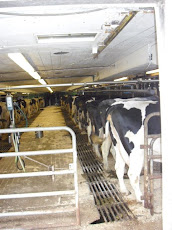


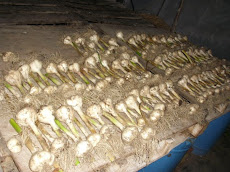


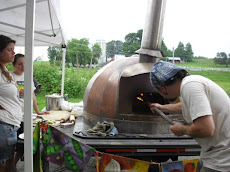

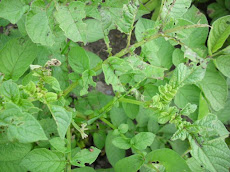


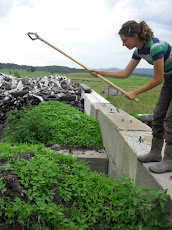


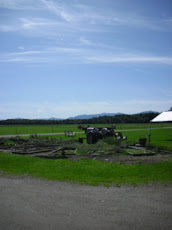
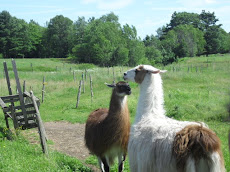

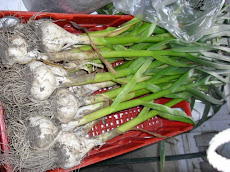


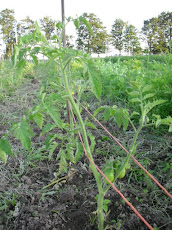

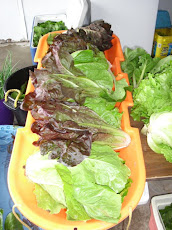


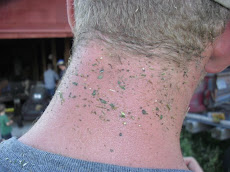

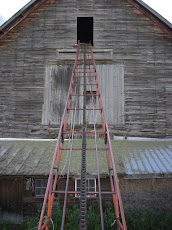

.JPG)
.JPG)


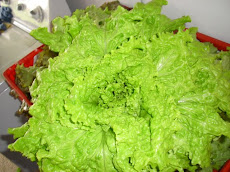

.jpg)
.JPG)


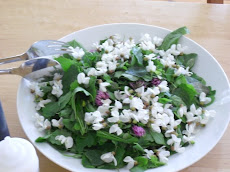
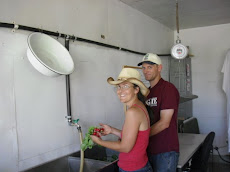




.JPG)
.JPG)